Skip to the page
Spiral, Fern & Honeycomb

Every pattern is a short rule played long.

Pattern family

Combs & Cases

Wax combs, paper nests, mud nests and the cases caddisfly larvae carry

Combs, paper nests, mud nests and portable cases built by insects: the honeybee comb, the paper wasp nest, the mud dauber nest and the caddisfly larva's case. Each entry says how the structure is built and what a named study measured, and every nest is seen through photographs only. Bird and mammal builders are not covered, and there is no advice on removing nests or treating stings.

4 patterns; the anchor entry comes first

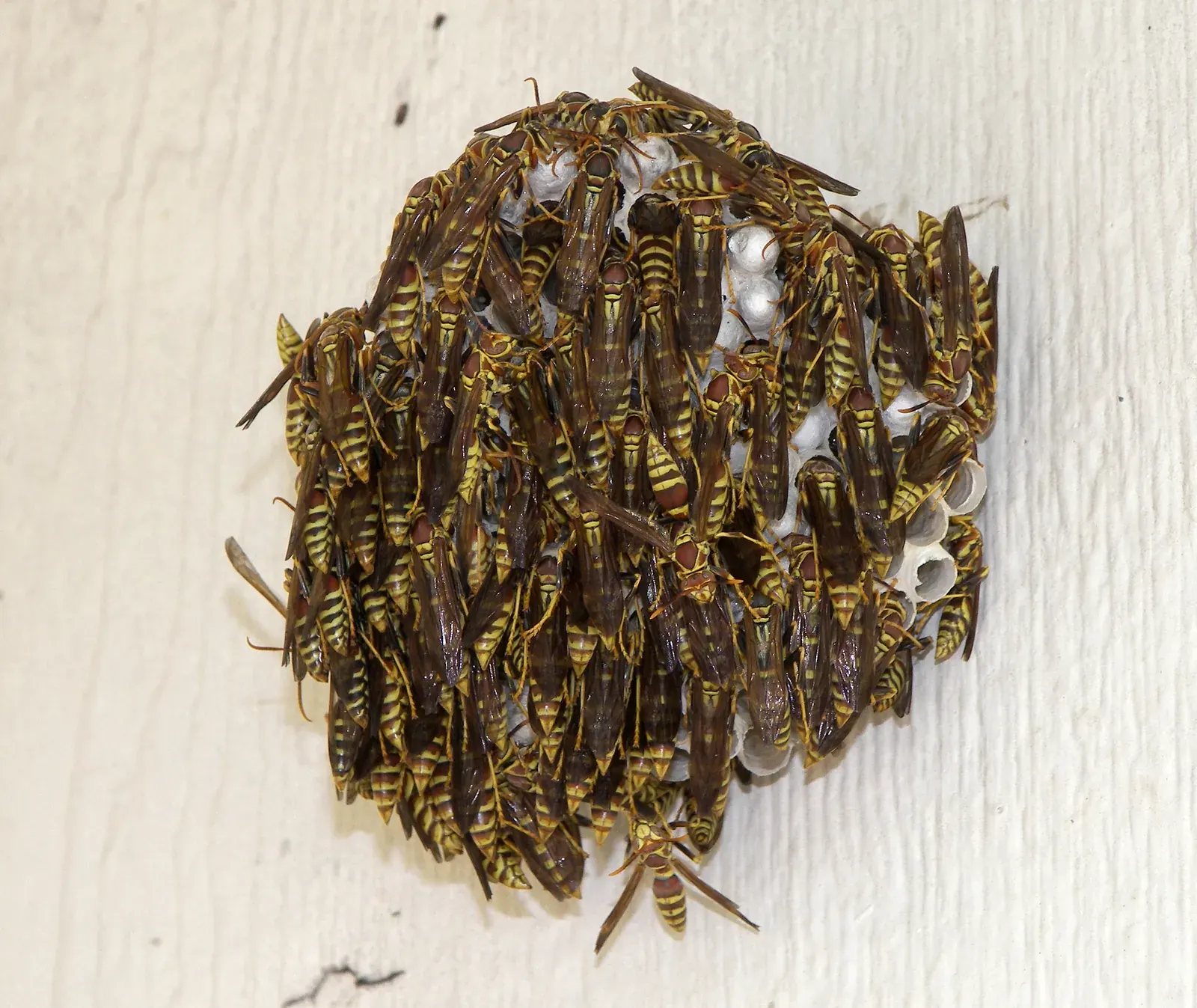
Paper wasp comb: a Polistes exclamans nest on a pale wall, crowded with adult wasps, a few paper cells showing

Paper Wasp Nest: One Study Found Order Only Over Short Range

Pattern entry ·

Pattern
Six-sided paper cells with paired five- and seven-sided cells
Made by
behavior: candidate (Nazzi 2016 [full text]) · packing: candidate (Krishna et al. 2022 [full text])

Paper wasp nests are single-layer combs of six-sided plant-fiber cells. One 2022 study of Polistes wattii nests found short-range order and paired 5-7 defects.

Picture credit

"Polistes exclamans nest" by Larry D. Moore — https://commons.wikimedia.org/wiki/File:Polistes_exclamans_nest.jpg — CC BY 4.0 (https://creativecommons.org/licenses/by/4.0/); modified: resized to 1600 px wide and saved as WebP
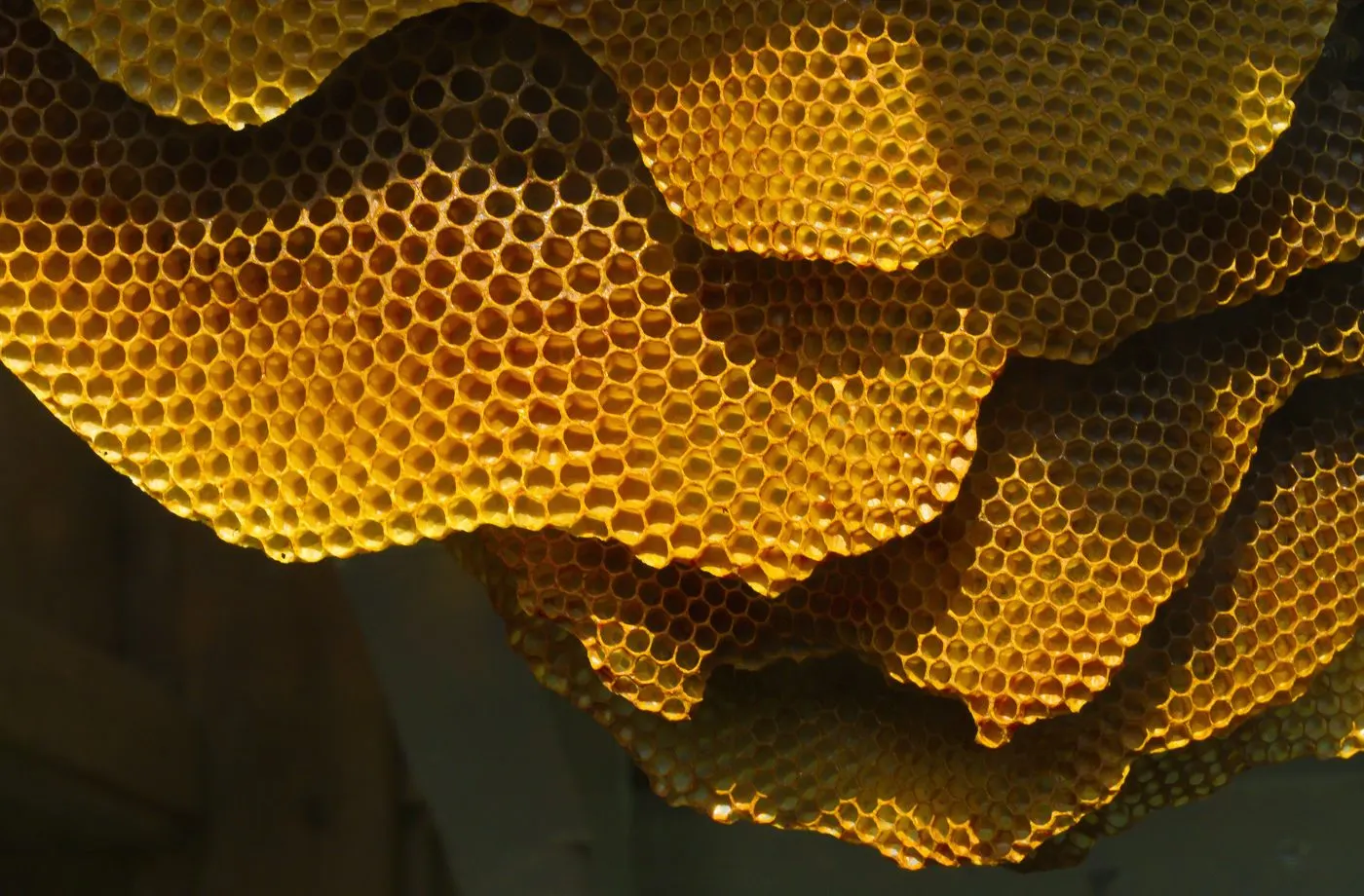
  1. Honeycomb: several sheets of empty wax comb hanging in layers, each face a field of six-sided cells in offset rows

    Why Are Honeycombs Hexagonal? Likely Six Equal Neighbors

    Mechanism deep dive ·

    Picture credit

    "Honey Comb Structure" by Gavin Mackintosh from South Molton, United Kingdom — https://commons.wikimedia.org/wiki/File:Honeycomb_structure_(6248780733).jpg — CC BY 2.0 (https://creativecommons.org/licenses/by/2.0/); modified: downscaled from 5066 x 3330 to 1400 x 920 pixels

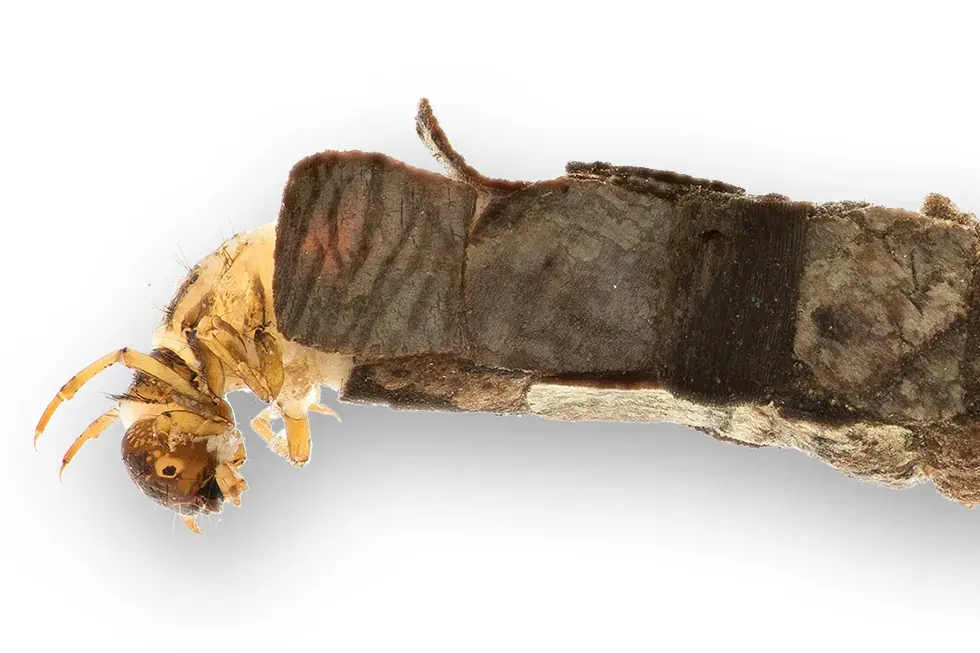
  2. Caddisfly case: a Lepidostoma hirtum larva, head and legs out of the front of a long tube of flat brown plant pieces

    Caddisfly Case: Three Separate Origins in a 2024 Family Tree

    Pattern entry ·

    Picture credit

    "Lepidostoma hirtum larva" by Hallvard Elven, Naturhistorisk museum, Universitetet i Oslo — https://commons.wikimedia.org/wiki/File:Lepidostoma_hirtum_larva.jpg — CC BY 4.0 (https://creativecommons.org/licenses/by/4.0/); modified: cropped to a 3:2 frame around the larva and the front of its case (box 110, 40, 1090, 693 of 2000 x 808, from the original orig-Lepidostoma_hirtum_larva.jpg): the whole larva and about three complete case sections, with the rear of the case left out at the right; original not altered, saved as WebP at the crop's own size, 980 x 653, not enlarged

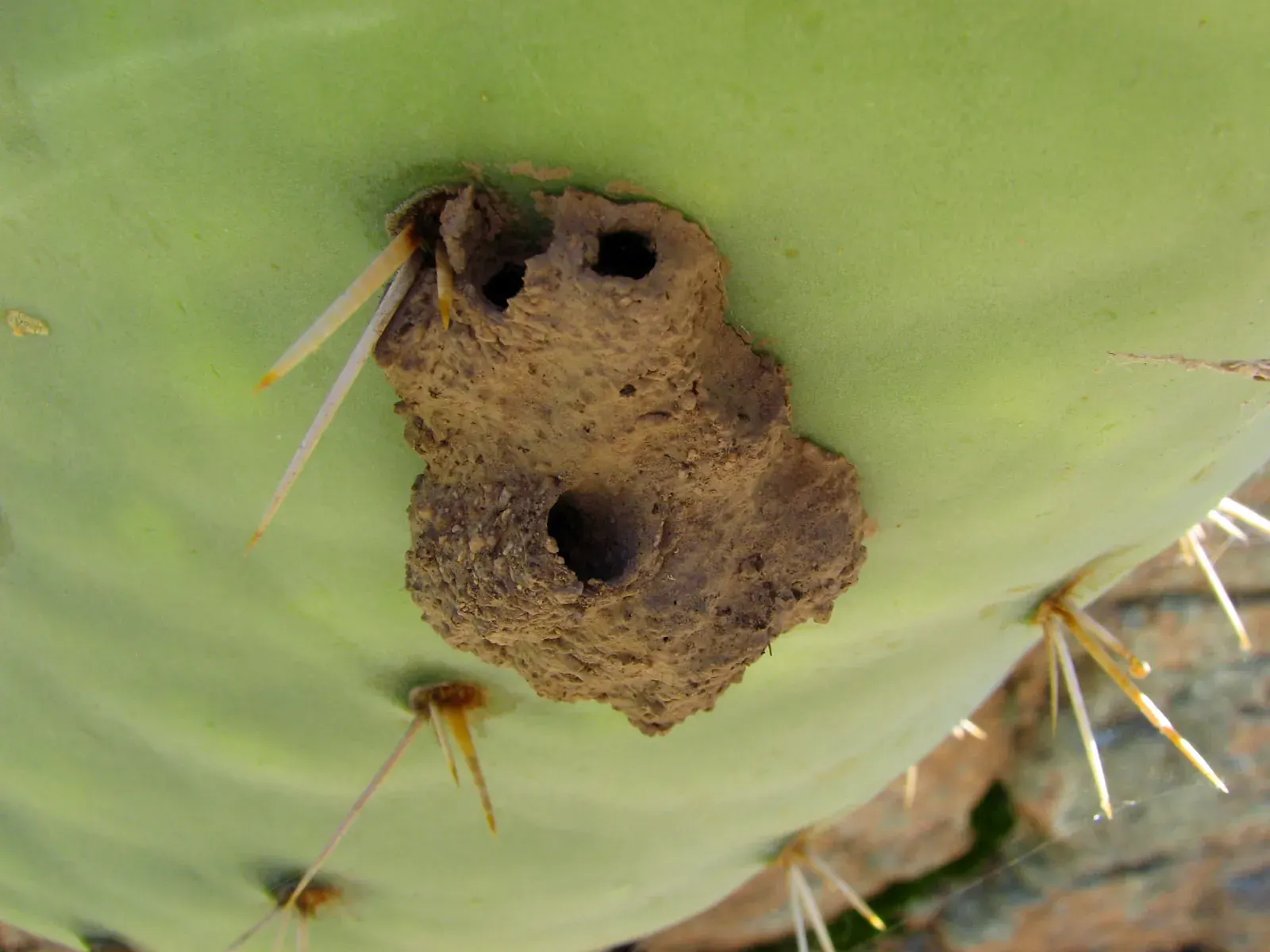
  3. Mud dauber nest on a cactus: a lumpy brown mud nest with three round openings, stuck to a green cactus pad among spines

    Mud Dauber Nest: Tapping May Pack the Mud Walls Hard

    Pattern entry ·

    Picture credit

    "Mud Dauber Nest" by Katja Schulz — https://commons.wikimedia.org/wiki/File:Mud_Dauber_Nest_-_Flickr_-_treegrow.jpg — CC BY 2.0 (https://creativecommons.org/licenses/by/2.0/); modified: saved as WebP at the original 1600 px width